Before You Submit to Spectrochimica Acta Part A: Molecular and Biomolecular Spectroscopy, What Canadian Researchers Should Know
Spectrochimica Acta Part A: Molecular and Biomolecular Spectroscopy is a peer-reviewed journal that has been publishing since 1995, with eighteen issues a year. It covers spectroscopy applied to molecules and biomolecules, from the techniques themselves to the chemistry they reveal. If you’re a student or early-career researcher in Canada weighing where to send a manuscript, the practical answer is this: read the journal’s guide for authors first, then build your paper around it.
That order matters. Editors screen new manuscripts against the guide before peer review begins, so a paper that misses the formatting or scope expectations can stall before a reviewer ever sees your data. A good template helps. SciSpace, for one, describes a journal-aligned template with front matter, an abstract, a body organized to the journal’s article types, and a reference list in the required style.
Spectroscopic methods also matter well beyond the journal itself. They underpin greener analysis, since identifying compounds quickly and non-destructively can cut solvent use and waste, a priority across Canada’s chemical sector. This article explains what the journal publishes, how to prepare your submission, and where details such as special issues, editorial contacts, and fees still need confirming on the journal’s own pages.
What Spectrochimica Acta Part A Covers

Why Spectroscopy Sits at the Crossroads of Chemistry, Physics, and Biology
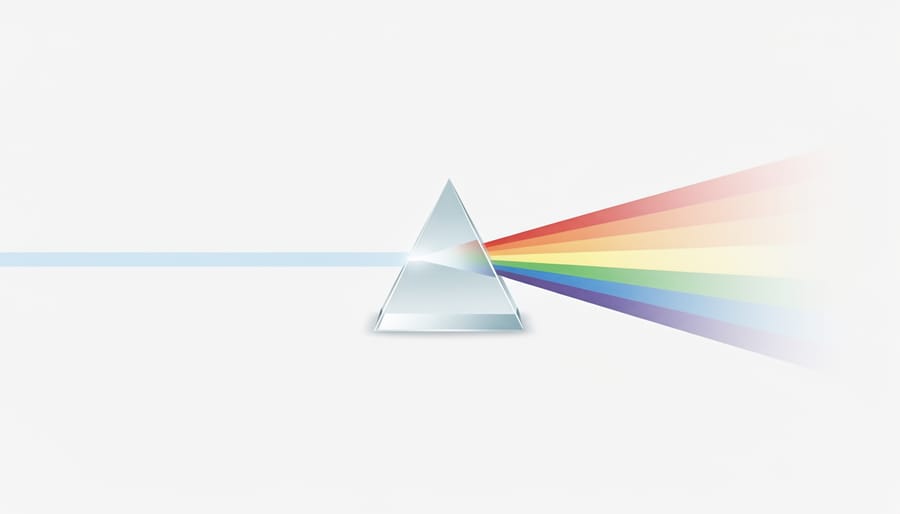
Spectroscopy earns its place in so many labs because it asks one simple question: what happens when light meets matter? A chemist reads the answer as structural detail, a physicist as energy transitions and bonding behaviour, and a biologist as clues about how large molecules fold, bind, and interact. A property such as molecular weight helps identify a compound, while spectral patterns reveal how its atoms are arranged and how it behaves.
That shared toolkit is why a journal with a molecular and biomolecular focus fits readers well. A student in organic chemistry, a physics graduate working on instrumentation, and a life scientist studying proteins can all find methods and results they can use. For Canadian readers building careers across these fields, learning to read and write spectroscopic work is a practical, transferable skill.
Key Journal Details at a Glance
Before planning a submission, it helps to separate what is confirmed from what still needs checking. Spectrochimica Acta Part A: Molecular and Biomolecular Spectroscopy has been in publication since 1995 and it releases eighteen issues per year. Those are the two facts this article treats as verified.
| Detail | Status |
|---|---|
| First year of publication | 1995 (verified) |
| Issues per year | Eighteen (verified) |
| Special issues | Confirm with the publisher |
| Editorial contact | Confirm with the publisher |
| Publication model and fees | Confirm with the publisher |
A steady schedule of eighteen issues a year means new work appears regularly, so it is worth checking recent issues to see what the journal is currently publishing.
Notice what is not in the table as a confirmed fact. Whether special issues are planned, who to contact on the editorial side, and how the journal handles its publication model and any associated fees have not been verified here. Guessing at these could cost you time or money, particularly if you are an early-career researcher working with a limited budget.
For those details, go straight to the publisher’s official pages for the journal. They are the authoritative source, and they are updated more reliably than any summary, including this one.
How Manuscripts Are Screened and Formatted
Anatomy of a Journal-Ready Manuscript
A journal-ready manuscript is built from parts that each have a job. SciSpace describes its Spectrochimica Acta Part A template as including front matter, an abstract, a body organized to the journal’s article types, and a reference list in the journal’s required style. Think of those as a sequence you can check off before submitting:
- Front matter: State a precise title, author affiliations, and keywords so editors and readers can place your spectroscopy work at once.
- Abstract: Summarize the molecule or system studied, the technique used, and the main finding in a few plain sentences.
- Body aligned to article type: Organize the introduction, methods, results, and discussion to match the article type you are submitting, as the guide for authors describes.
- Reference list in the required style: Format every citation exactly as the journal specifies so nothing is flagged on screening.
In a spectroscopy paper, the body deserves the most care. Describe instrument settings, sample preparation, and spectral assignments clearly enough that another laboratory could repeat your measurements. Explain any specialized terms briefly, since readers come from chemistry, physics, and biology.
Remember that editors screen new manuscripts against the guide for authors before peer review. A template is a helpful starting point, but the official guide remains the authority, so check each component against it before you submit.
Passing the Pre-Review Screen
Before peer reviewers ever see your paper, an editor checks it against the journal’s guide for authors. SciSpace reports that new manuscripts are screened this way before peer review, which makes the guide for authors the first test your paper has to pass.
The most avoidable problems are structural. A manuscript can have strong spectra and sound analysis and still be set aside because the front matter is incomplete, the abstract is missing, or the body doesn’t follow the journal’s article types. Reference lists in the wrong style are another easy miss.
A short pre-submission check helps:
– Read the current guide for authors on the publisher’s site, not a summary or a copy from an older paper.
– Confirm that your article type matches the structure of your body sections.
– Compare your front matter and abstract against the journal’s expectations.
– Reformat references to the required style, then recheck them.
Templates like the one SciSpace offers can speed up formatting, but treat the official guide as the final word.
Why Canadian Researchers Have a Stake in Spectroscopic Science
Canada has a long-standing research culture in analytical and physical chemistry, and that tradition is a big part of why a journal like Spectrochimica Acta Part A matters to readers here. Spectroscopic methods are everyday tools in university laboratories across the country, where graduate students and postdoctoral researchers use them to characterize new compounds, follow reaction progress, and probe how molecules behave in biological settings. Industry laboratories lean on the same techniques for quality control and materials development, so the skills carry well beyond the academic bench.
For early-career researchers, a specialist journal that has been publishing since 1995 offers a deep archive to learn from. Reading papers closely shows how experienced authors frame a spectroscopic question, justify an instrument or method, and present data so reviewers can follow it. That kind of close reading is one of the fastest ways to sharpen your own writing and experimental design.
Scholarship recipients have a particular reason to engage with the literature. Funded projects usually come with an expectation of visible output, and a well-prepared manuscript aimed at the right journal is a concrete way to show that. Knowing the journal’s scope and screening expectations early, including that editors check new submissions against the guide for authors before peer review, helps you plan your work so it fits.
Sustainability connects naturally here too. Because many spectroscopic techniques can analyze samples with little or no destruction, they support cleaner, less wasteful chemical practice, a priority that Canadian researchers continue to bring to the field.
Spectroscopy and Sustainable Chemistry

Spectroscopic methods support greener chemical practice because they let chemists learn a great deal about a sample while using very little of it. Many techniques are non-destructive, so a single sample can be measured, kept, and measured again by another method. That means fewer repeat preparations, less solvent, and less waste heading to disposal.
Reaction monitoring is another place where the benefit shows up. When a chemist can watch a reaction progress by following how molecules absorb or scatter light, there is no need to guess when it has finished. Stopping at the right moment avoids over-processing, reduces unwanted by-products, and cuts the energy spent heating or stirring a batch longer than necessary. Some approaches can even be applied directly to a reaction mixture, which limits the sampling and cleanup that traditional checks demand.
Quality control matters just as much. In the production of dyestuffs, pigments, and pharmaceuticals, spectroscopic checks help confirm that a product matches its expected molecular identity before it moves further down the line. Catching a problem early prevents an entire off-specification batch from being made, shipped, and discarded.
For Canadian researchers, these practical advantages connect to broader conversations about how science responds to real-world sustainability challenges. Reading and contributing to the spectroscopic literature is one way students and professionals can build skills that make laboratory and industrial chemistry cleaner and more efficient.
Common Questions About Publishing in a Specialist Spectroscopy Journal
Where do I find the guide for authors? Go to the journal’s page on the publisher’s website and look for the guide for authors. Treat it as the authoritative source for formatting, article types, and submission steps, because editors screen new manuscripts against it before peer review.
Does a template replace the official requirements? No. SciSpace says its journal-aligned template includes front matter, an abstract, a body organized to the journal’s article types, and a reference list in the journal’s required style. That makes it a helpful starting scaffold, but it is a third-party tool. If the template and the guide for authors ever disagree, follow the guide.
What should I check before submitting? Compare your draft against the guide for authors line by line. Confirm that your article type matches what the journal accepts, that your abstract and front matter are complete, and that your references follow the required style. Mismatches in these areas are the easiest ones to avoid, so give them a final read before you upload.
Where can I confirm fees, the publication model, and special issues? These details aren’t confirmed here, so please don’t rely on assumptions or secondhand summaries. Check the publisher’s official pages, or contact the editorial office using the details listed there, before you commit to a timeline or budget. Do the same if you hope to contribute to a themed collection, since we can’t say whether any are currently open.
A final tip for early-career researchers: ask a supervisor or colleague who has published in a specialist journal to read your manuscript before you submit. A fresh pair of eyes often catches the small slips that screening is meant to find.
Spectrochimica Acta Part A: Molecular and Biomolecular Spectroscopy has been in publication since 1995 and releases eighteen issues a year, which makes it a steady, well-established home for work on how light reveals the structure and behaviour of molecules. Before a manuscript reaches peer review, editors screen it against the journal’s guide for authors, and SciSpace notes that a journal-aligned template covers front matter, an abstract, a body organized to the journal’s article types, and a reference list in the required style.
For Canadian students and researchers, the practical takeaway is simple: start with the official guide for authors, treat any template as a helpful companion rather than a substitute, and plan your manuscript’s structure before you write a single paragraph. Confirm details we could not verify here, such as special issues, editorial contacts, and any fees or publication model, directly with the publisher so there are no surprises at submission.
A careful, well-prepared paper is easier for editors to move forward and easier for readers to trust. Whether you are an early-career researcher building your publication record or a seasoned analyst sharing a new method, your work adds to a literature that supports cleaner analysis, less waste, and more sustainable chemistry. Take your time, read closely, and submit with confidence.