The Chemical Architecture Behind CBD’s Therapeutic Power
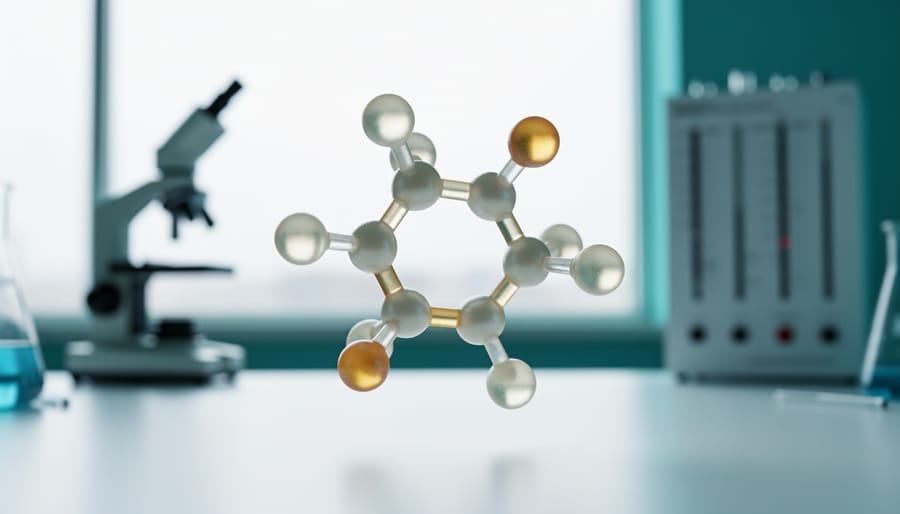
Cannabidiol (CBD) is a 21-carbon terpenophenolic compound with the molecular formula C₂₁H₃₀O₂ and a molecular weight of 314.46 g/mol. Its structure features a tricyclic core consisting of a cyclohexene ring, a tetrahydropyran ring, and a resorcinol moiety, distinguished from other cannabinoids by the absence of psychoactive properties despite sharing structural similarities with delta-9-tetrahydrocannabinol (THC). Understanding CBD’s molecular architecture is fundamental for researchers developing extraction protocols, pharmaceutical professionals ensuring product consistency, and students who study cannabinoid chemistry through programs supported by Canadian science scholarships.
The chemical structure determines everything from CBD’s solubility characteristics to its receptor binding affinity. Its specific stereochemistry, with defined configurations at multiple chiral centers, explains why synthetic analogs often fail to replicate the biological activity of naturally derived CBD. This molecular precision matters in quality control laboratories where analytical chemists use techniques like high-performance liquid chromatography and nuclear magnetic resonance spectroscopy to verify structural integrity.
Canadian researchers have contributed significantly to cannabinoid structure elucidation, building on the pioneering work that first isolated and characterized these compounds. Today, understanding CBD’s chemical framework supports sustainable extraction methodologies that maximize yield while minimizing environmental impact, a priority for Canada’s growing cannabis research sector. The relationship between structure and function guides everything from formulation development to regulatory compliance in 2026’s evolving pharmaceutical landscape.
Fundamental Chemical Composition of CBD
At its core, cannabidiol is a medium-sized organic molecule with a precisely defined chemical identity. The CBD formula and molecular weight establishes its fundamental composition: C₂₁H₃₀O₂, indicating 21 carbon atoms, 30 hydrogen atoms, and 2 oxygen atoms. This translates to a molecular weight of 314.46 grams per mole, a value critical for analytical chemistry and pharmaceutical dosing calculations.
Understanding these basic parameters provides the foundation for all subsequent structural analysis. The elemental breakdown reveals that carbon constitutes approximately 80% of the molecule’s mass, with hydrogen contributing roughly 10% and oxygen the remaining 10%. This high carbon-to-oxygen ratio explains CBD’s lipophilic character, making it preferentially soluble in fats and oils rather than water.
- Molecular Formula
- C₂₁H₃₀O₂ represents the exact number and type of atoms present in one CBD molecule, establishing its elemental composition.
- Molecular Weight
- 314.46 g/mol quantifies the mass of one mole of CBD molecules, essential for calculating concentrations and dosages in research and pharmaceutical applications.
- IUPAC Name
- 2-[(1R,6R)-3-methyl-6-prop-1-en-2-ylcyclohex-2-en-1-yl]-5-pentylbenzene-1,3-diol provides the systematic nomenclature that unambiguously identifies CBD’s structure according to international chemical standards.
- Structural Class
- CBD belongs to the terpenophenolic class of compounds, combining phenolic and terpene structural features that characterize cannabinoids.
The building blocks themselves tell an important story. The 21 carbon atoms form an interconnected framework of rings and chains, while the two oxygen atoms appear as hydroxyl groups that significantly influence the molecule’s reactivity and biological interactions. The 30 hydrogen atoms saturate most of the carbon skeleton, though strategic points of unsaturation create the aromatic systems that contribute to CBD’s stability.
For Canadian researchers working with CBD, these fundamental values serve as the starting point for quality control, synthesis verification, and analytical method development. Every spectroscopic analysis, chromatographic separation, and purity assessment ultimately traces back to this basic chemical identity.
The CBD Molecular Structure: Anatomy and Architecture
Ring Systems and Aromatic Components
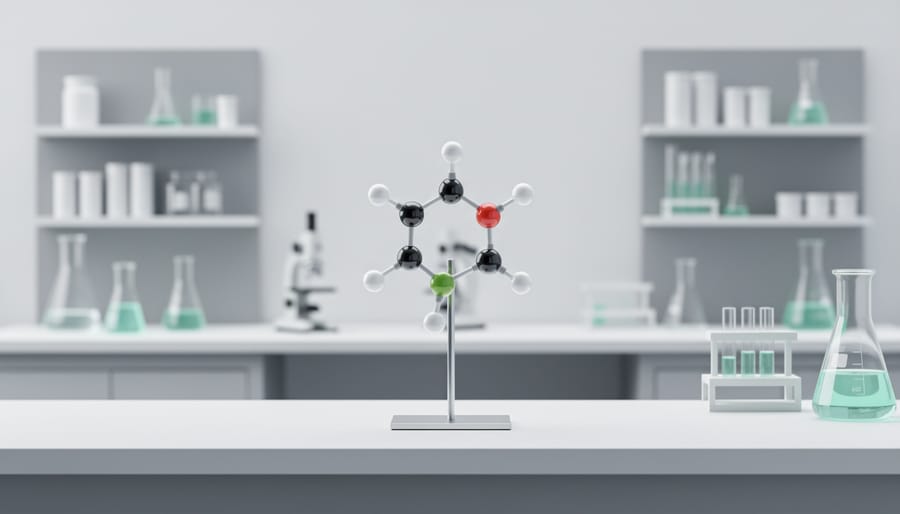
CBD’s structural foundation rests on two benzene rings that form part of its tricyclic dibenzopyran core. These aromatic components are characterized by a system of conjugated double bonds that create remarkable chemical stability through electron delocalization. The first benzene ring, designated as the A-ring, contains two hydroxyl substituents that anchor functional activity. The second aromatic system, the B-ring, lacks oxygen-containing groups but contributes significantly to the molecule’s overall hydrophobic character.
The aromatic nature of these rings fundamentally shapes CBD’s physical behavior. Benzene rings are inherently nonpolar structures that resist dissolution in water while readily dissolving in fats and organic solvents. This lipophilicity explains why CBD concentrates in fatty tissues and crosses lipid membranes efficiently, a property critical for its bioavailability and distribution throughout the body.
The resonance stabilization within these aromatic systems also protects CBD from rapid degradation under normal storage conditions. The delocalized electron cloud makes the rings resistant to many chemical attacks, though prolonged exposure to light, heat, or oxygen can still trigger structural changes. Canadian pharmaceutical manufacturers exploit this inherent stability when designing formulations and establishing shelf-life parameters for CBD products.
Functional Groups and Chemical Reactivity
CBD’s chemical reactivity stems primarily from its two hydroxyl groups (-OH) positioned on the aromatic A-ring. The first hydroxyl sits at the 2′-position of the resorcinol moiety, while the second occupies the 6′-position. These oxygen-containing functional groups create sites of increased electron density, making them critical for both chemical transformations and biological interactions.
The hydroxyl groups render CBD amphiphilic, partially hydrophilic due to hydrogen bonding capacity, yet overall lipophilic because of the extensive hydrocarbon framework. This dual character allows CBD to traverse cellular membranes while maintaining some aqueous solubility. The phenolic hydroxyl groups exhibit weak acidity (pKa approximately 9-10), remaining predominantly neutral at physiological pH but capable of deprotonation under basic conditions.
These functional groups serve as hydrogen bond donors and acceptors, enabling CBD to interact with protein binding sites in biological targets. The specific positioning of the hydroxyls relative to the pentyl side chain creates a unique pharmacophoric pattern distinct from other cannabinoids. This spatial arrangement influences receptor binding affinity and selectivity.
Chemically, the hydroxyl groups undergo typical phenol reactions: esterification, etherification, and oxidation to quinones under certain conditions. During extraction and storage, these groups make CBD susceptible to oxidative degradation, particularly when exposed to light, heat, or oxygen. Understanding this reactivity informs proper handling protocols in Canadian pharmaceutical operations, where controlling degradation pathways ensures product stability and therapeutic consistency.
Stereochemistry and Spatial Configuration
Cannabidiol exists as a three-dimensional molecule where the spatial arrangement of atoms fundamentally determines its biological activity and interactions with molecular targets. Unlike many cannabinoids, CBD contains only two chiral centers located at carbon positions C-1′ and C-6′, resulting in four possible stereoisomers. The naturally occurring form found in Cannabis sativa is (−)-cannabidiol with the (1’R,6’R) configuration, and this specific stereoisomer exhibits the therapeutic properties associated with CBD.
The stereochemistry at these chiral centers dictates how CBD fits into receptor binding sites and interacts with enzymes. The 1’R configuration positions the pentyl side chain in a specific orientation relative to the ring system, while the 6’R center determines the spatial relationship between the resorcinol moiety and the cyclohexene ring. These precise arrangements create a molecular shape that enables CBD to interact with multiple biological targets including cannabinoid receptors, serotonin receptors, and various ion channels.
The significance of stereochemistry becomes apparent when comparing natural (−)-CBD to synthetic stereoisomers. Studies demonstrate that different stereoisomers exhibit distinct pharmacological profiles, with the naturally occurring form showing superior activity at most biological targets. The (+)-enantiomer, for instance, displays reduced affinity for cannabinoid receptors and altered metabolic pathways compared to the natural (−)-form.
Beyond chiral centers, CBD’s conformational flexibility plays a crucial role in its biological activity. The molecule can adopt multiple three-dimensional shapes through rotation around single bonds, particularly in the pentyl side chain and the connection between ring systems. This flexibility allows CBD to adjust its shape when binding to different receptors, contributing to its diverse pharmacological effects. Understanding these spatial relationships proves essential for researchers developing CBD-based therapeutics and for quality control specialists ensuring product consistency in pharmaceutical manufacturing.
CBD vs THC: Structural Similarities and Critical Differences
CBD and THC stand as constitutional isomers, sharing the identical molecular formula C21H30O2 yet differing fundamentally in how their atoms connect. This seemingly minor structural variation creates two distinct compounds with dramatically different effects on human physiology.
Both cannabinoids arise from the same precursor molecules in cannabis plants and possess the same component parts: 21 carbon atoms, 30 hydrogen atoms, and 2 oxygen atoms. The critical distinction lies in the arrangement of these atoms, specifically in how one of the oxygen atoms participates in ring formation. In THC, this oxygen bridges two carbon atoms to form a closed cyclic ether ring within the central portion of the molecule. CBD, by contrast, features an open ring structure where this oxygen remains part of a hydroxyl group rather than forming the ether bridge.
This difference in ring closure fundamentally alters each molecule’s three-dimensional shape. THC’s closed ring creates a more rigid, compact structure that fits precisely into the CB1 cannabinoid receptor’s binding pocket, much like a key sliding into a lock. CBD’s open configuration produces a more flexible molecule that cannot achieve this same fit, explaining why CBD lacks THC’s intoxicating properties despite their chemical similarity.
| Property | CBD | THC |
|---|---|---|
| Molecular Formula | C21H30O2 | C21H30O2 |
| Ring Structure | Open ring with free hydroxyl | Closed cyclic ether ring |
| CB1 Receptor Binding | Weak/antagonistic | Strong agonist |
| Psychoactive Effect | Non-intoxicating | Intoxicating |
| Canadian Legal Status | Legal (regulated) | Legal (controlled) |
The spatial consequences extend beyond receptor binding. CBD’s hydroxyl group positioned on the outer ring enables hydrogen bonding interactions that THC cannot form, contributing to CBD’s activity at serotonin receptors and other non-cannabinoid targets. Meanwhile, THC’s cyclic ether creates a hydrophobic pocket that enhances its lipid solubility and membrane penetration characteristics.
Canadian researchers have extensively documented how these structural differences translate to pharmacological profiles. THC’s tight CB1 binding produces the euphoric and cognitive effects associated with cannabis intoxication, while CBD’s poor CB1 affinity and potential antagonist behavior at these same receptors can actually modulate THC’s effects when both compounds are present together. This structural relationship underpins the entourage effect observed in whole-plant cannabis preparations and informs formulation strategies in pharmaceutical development.
Chemical Properties Derived from Structure
CBD’s molecular architecture directly governs its physical and chemical behavior, making structure-function relationships essential for pharmaceutical applications and laboratory work. The compound exhibits distinct properties that stem from its specific arrangement of atoms and functional groups.
Solubility Characteristics
The lipophilic nature of CBD arises from its extended hydrocarbon framework and aromatic ring systems. With a log P value around 6-7, CBD demonstrates high fat solubility but minimal water solubility (approximately 1-2 mg/L at room temperature). This lipophilicity explains why CBD readily dissolves in organic solvents like ethanol, methanol, and various oils, but requires formulation strategies for aqueous delivery systems. The two hydroxyl groups provide limited polar character, creating slight amphiphilic properties that pharmaceutical chemists exploit through micelle formation and nanoemulsion technologies.
Thermal Stability and Physical State
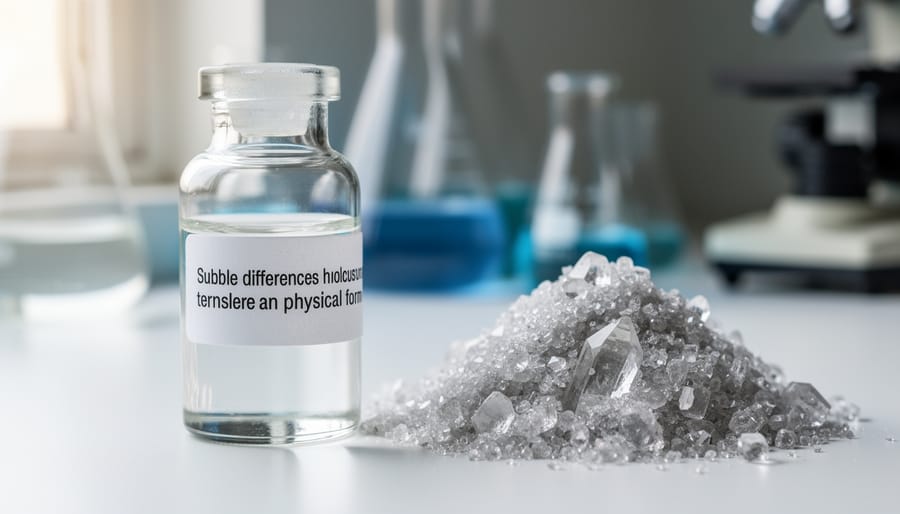
CBD exists as a crystalline solid at room temperature with a melting point between 66-67°C. This relatively low melting point reflects moderate intermolecular forces between molecules. The compound remains stable under typical storage conditions but demonstrates temperature sensitivity at elevated heat. Decarboxylation of cannabidiolic acid (CBDA) to CBD occurs around 120°C, while CBD itself begins degrading above 160-180°C, forming cyclization products and other breakdown compounds.
pH Sensitivity and Reactivity
The phenolic hydroxyl groups make CBD weakly acidic (pKa approximately 9.5), though it behaves as a neutral molecule under physiological pH conditions. These hydroxyl groups represent the primary reactive sites, participating in esterification, etherification, and glycosylation reactions. CBD shows susceptibility to oxidation when exposed to light, air, and heat, particularly at the allylic positions adjacent to the double bonds. This oxidative vulnerability necessitates storage in amber containers under nitrogen atmosphere for research-grade samples.
Understanding these chemical properties enables Canadian researchers and manufacturers to develop stable formulations, establish proper storage protocols, and design extraction methods that preserve CBD’s integrity throughout the production chain.
Structure-Activity Relationships in CBD
The relationship between CBD’s molecular architecture and its biological activity demonstrates how precise structural features dictate therapeutic potential. Unlike THC, which binds directly to CB1 receptors through specific spatial alignment, CBD exhibits low affinity for traditional cannabinoid receptors, instead functioning through multiple indirect mechanisms linked to its unique structural configuration.
The free hydroxyl groups at positions 1 and 3 on CBD’s aromatic rings serve as critical interaction points. These hydroxyl moieties enable hydrogen bonding with various protein targets, contributing to CBD’s activity at serotonin 5-HT1A receptors. This structural feature explains CBD’s potential anxiolytic effects, as the hydroxyl positioning allows appropriate orientation within the receptor binding pocket. Research has shown that modifications to these hydroxyl groups significantly reduce affinity for 5-HT1A receptors, confirming their functional importance.
CBD’s non-planar three-dimensional structure, particularly the angle between its ring systems, prevents the tight fit required for CB1 receptor activation. However, this same spatial arrangement permits CBD to act as a negative allosteric modulator of CB1 receptors. The pentyl side chain extends into specific receptor regions, altering receptor shape without occupying the orthosteric binding site where THC binds. Canadian research teams have mapped these allosteric interactions using computational modeling and site-directed mutagenesis.
The lipophilic character conferred by CBD’s hydrocarbon framework and aromatic rings facilitates cell membrane penetration, enabling interactions with intracellular targets. This lipophilicity allows CBD to modulate transient receptor potential (TRP) channels and peroxisome proliferator-activated receptors (PPARs), where its elongated molecular shape fits within specific binding domains. The pentyl tail orientation proves particularly important for TRPV1 activation, contributing to CBD’s potential anti-inflammatory properties.
These structure-activity relationships explain why even minor structural modifications alter CBD’s pharmacological profile, underscoring the importance of molecular integrity in pharmaceutical formulations.
Analytical Methods for Structural Characterization
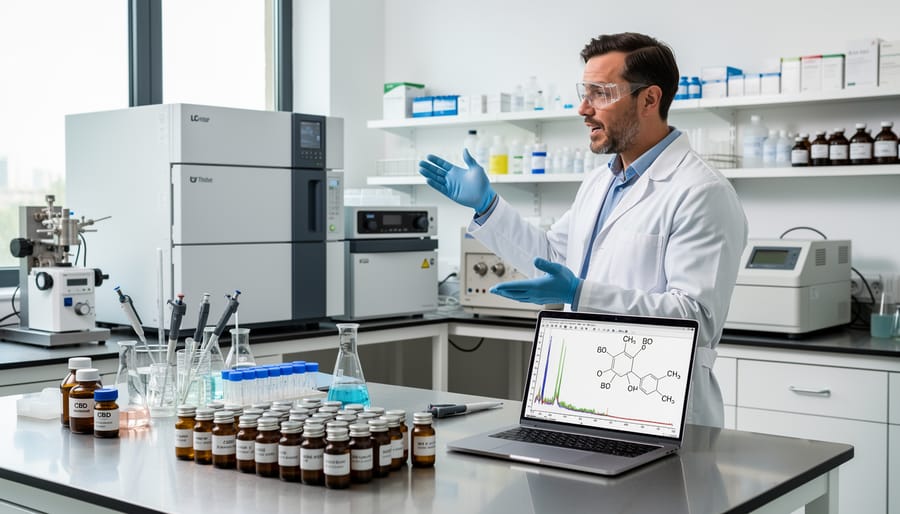
Confirming CBD’s molecular structure and purity requires a suite of analytical techniques that form the backbone of quality assurance in pharmaceutical manufacturing. Canadian laboratories and research facilities rely on these methods to verify cannabinoid composition, support regulatory compliance, and advance veterinary cannabinoid research.
- Nuclear Magnetic Resonance (NMR) Spectroscopy
- Reveals the exact arrangement of hydrogen and carbon atoms in CBD’s structure by detecting how nuclei behave in a magnetic field. Provides definitive structural confirmation and can identify impurities at the molecular level.
- Mass Spectrometry (MS)
- Measures the molecular weight and fragmentation pattern of CBD, confirming its molecular formula C21H30O2. Often coupled with chromatography for enhanced identification power.
- High-Performance Liquid Chromatography (HPLC)
- Separates and quantifies CBD from other cannabinoids and contaminants based on chemical properties. Essential for potency testing and quality control in production environments.
- Infrared (IR) Spectroscopy
- Identifies functional groups like hydroxyl and aromatic rings by measuring molecular vibrations. Offers rapid screening for structural verification.
- X-ray Crystallography
- Determines the precise three-dimensional arrangement of atoms in crystalline CBD samples. Provides the most detailed structural data available, confirming stereochemistry with atomic-level precision.
Modern analytical protocols typically combine multiple techniques to cross-verify results. For instance, HPLC quantifies CBD concentration while NMR confirms structural integrity, and mass spectrometry validates molecular weight. Canadian universities training the next generation of pharmaceutical scientists emphasize these methodologies, often supported through science scholarship funding that enables hands-on experience with advanced instrumentation. This multi-method approach ensures rigorous quality standards that meet Health Canada requirements while advancing our understanding of cannabinoid chemistry.
Implications for Canadian Pharmaceutical Manufacturing
Understanding CBD’s chemical structure has profound implications for Canada’s pharmaceutical manufacturing sector, particularly as the industry scales production while maintaining rigorous quality standards. The three-ring architecture and specific functional group positioning directly inform extraction strategies, with manufacturers selecting solvents based on CBD’s lipophilic character and hydroxyl group interactions. Companies extracting from cannabis biomass must optimize temperature and pressure conditions that preserve the delicate stereochemistry while maximizing yield, preventing degradation of the dibenzopyran system through controlled thermal exposure.
Quality control laboratories across Canada rely on structural knowledge to develop precise analytical methods that distinguish CBD from its numerous analogues and degradation products. Chromatographic separation protocols exploit subtle polarity differences created by hydroxyl group positions, while spectroscopic techniques confirm intact ring systems. This structural expertise proves essential for meeting Health Canada’s pharmaceutical-grade purity requirements, particularly when detecting trace THC contamination that differs by only one cyclized bond.
Canadian research institutions have contributed significantly to sustainable CBD synthesis pathways that leverage structural insights. Scientists at universities and private laboratories work to develop biosynthetic routes using engineered microorganisms, targeting the specific enzyme-catalyzed steps that construct CBD’s unique architecture. These approaches reduce environmental impact compared to traditional plant extraction and offer students opportunities to pursue lab-based research in green chemistry applications.
The pharmaceutical manufacturing process benefits from understanding how CBD’s structure influences formulation stability. Protecting hydroxyl groups from oxidation during storage, selecting appropriate excipients that accommodate the lipophilic pentyl chain, and preventing photodegradation of the aromatic rings all stem directly from structural knowledge, ensuring Canadian manufacturers deliver consistent, therapeutically reliable products.
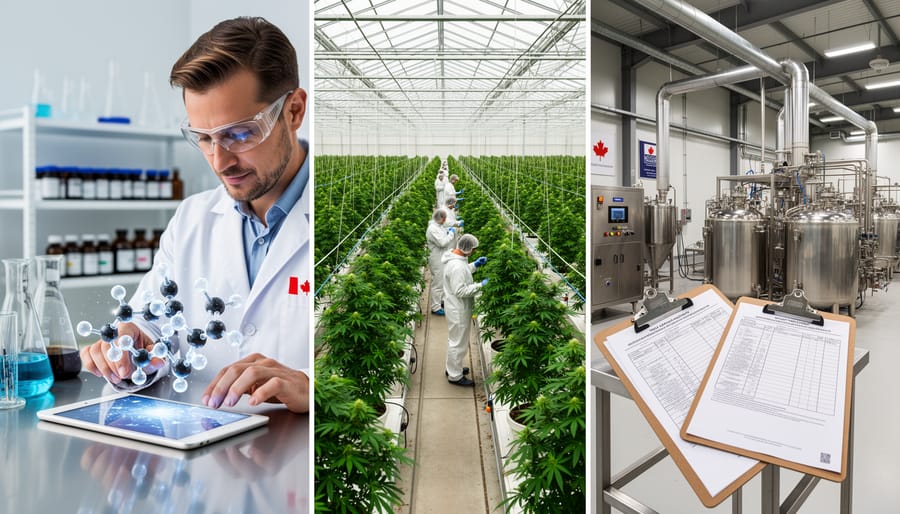
Understanding CBD’s chemical structure, from its molecular formula C21H30O2 to its distinctive dibenzopyran ring system, forms the essential foundation for advancing cannabinoid science and pharmaceutical innovation. The spatial arrangement of functional groups, stereochemical configuration, and three-dimensional architecture directly determine how CBD interacts with biological systems, informing everything from receptor binding to therapeutic applications.
For researchers and students, mastery of CBD’s molecular anatomy opens pathways to exploring structure-activity relationships, designing analytical methods, and contributing to cannabinoid research. Quality control specialists rely on structural knowledge to verify purity and identity through spectroscopic analysis, ensuring pharmaceutical-grade products meet rigorous standards. Manufacturers leverage these insights to optimize extraction processes, improve stability during formulation, and develop consistent delivery systems.
Canada’s position at the forefront of cannabis research benefits directly from a scientifically literate community that understands molecular fundamentals. As the pharmaceutical and biotechnology sectors continue expanding sustainable CBD production methods, structural chemistry remains central to innovation. The differences between CBD and its isomers, the reactivity of hydroxyl groups, and the compound’s lipophilic properties all translate into practical decisions in laboratory and manufacturing settings.
The molecular architecture of CBD represents more than academic interest, it embodies the intersection of organic chemistry, pharmacology, and applied science. Continued investigation into how structure influences function will drive next-generation therapeutics, improved analytical techniques, and environmentally responsible manufacturing practices that position Canadian researchers and industry leaders as global contributors to cannabinoid science.